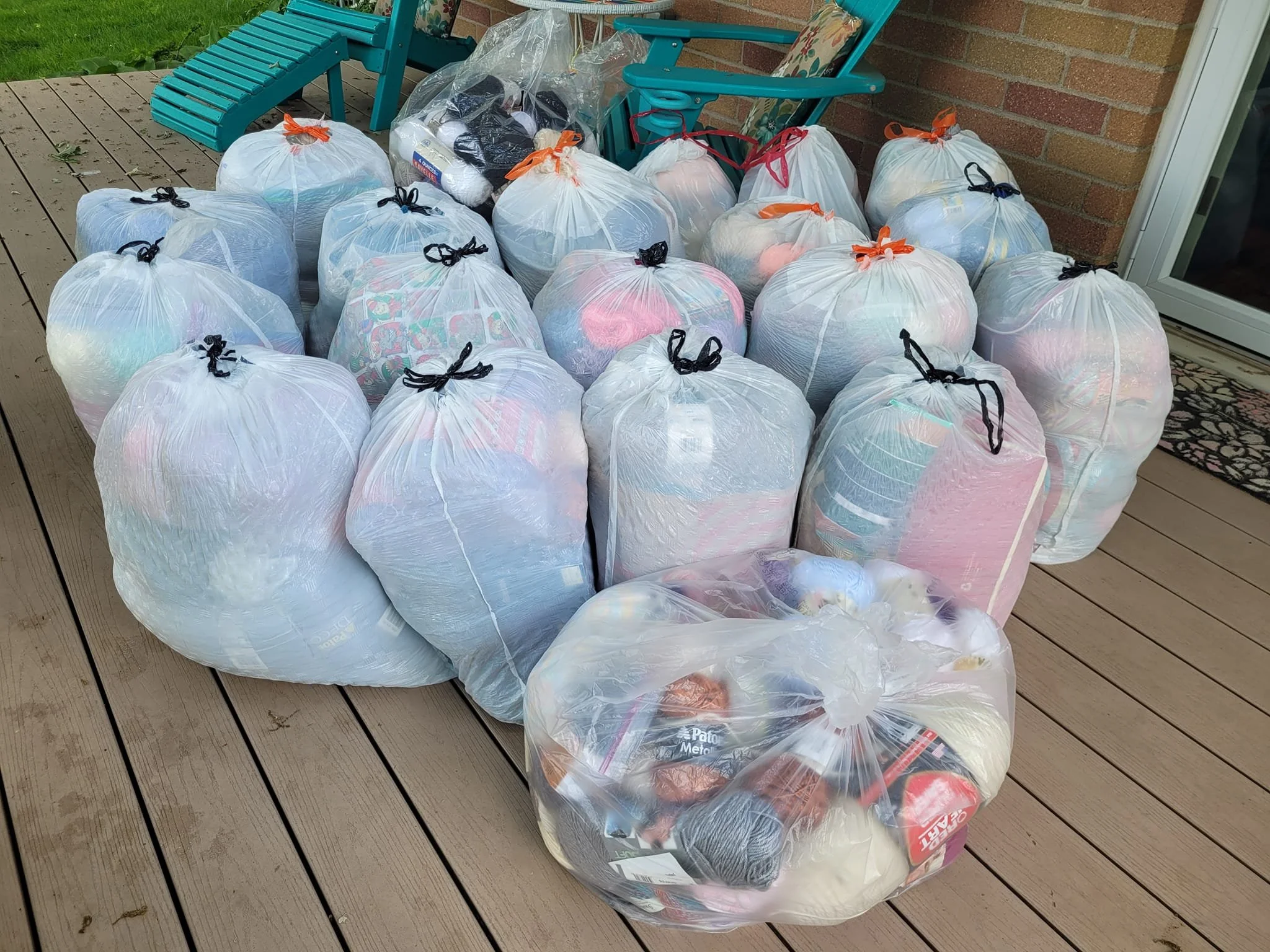
It Started With Yarn.
No business plan. No nonprofit. No grand vision.
Just a knitting club that needed yarn.
A knitting group was getting started inside a correctional facility. The interest was there. The supplies were not.
A local nonprofit was contacted with a simple request: did anyone have yarn they would be willing to donate?
They came through.
And that simple request exposed a much bigger opportunity.
On One Side: People Had Stuff
A surprising amount of what came next started with someone cleaning something out.
Grandma's sewing room had yarn and craft supplies that needed a new home.
Papa's library had shelves of books ready for new readers.
Someone cleaned out a home office and had stacks of binders. Those binders ended up at a reentry center, helping people organize all the paperwork, appointments, job information, and other pieces that come with returning to the community.
A home sale left behind perfectly good gym equipment.
And sometimes Mom gets a little carried away when notebooks are on sale, and suddenly there's a box of those available too.
Even unused postcards found a purpose, becoming thank-you cards instead of sitting in a drawer.
None of it was purchased specifically to make a difference. It was simply useful stuff that someone already had and no longer needed.
On the Other Side: People Needed Opportunities
Inside correctional facilities, there are incarcerated people asking for more opportunities to learn, participate in programs, build skills, and use their time productively.
There are also staff willing to create and facilitate those opportunities.
Sometimes the thing standing between the two is surprisingly small.
An apology letter writing workshop needs pens.
A Decision Points group needs yellow dry erase markers.
Someone who has hours to work independently could use a workbook, a self-help book, or a parenting resource, not just another beat-up paperback passed around the living unit.
These aren't million-dollar programs. Often, they aren't even hundred-dollar problems.
But when a state or county is facing a tight budget, the little extras are understandably not always at the top of the list. And corrections isn't exactly known for having the latest and greatest of everything. An office supply that hasn't been particularly useful since the '90s might still have a very productive second life.
That's where the two sides started to fit together.
What If We Just Connected Them?
Before throwing something away, is there someone who could use it?
Before buying something new, is what we need already sitting unused somewhere else?
And when a small expense is the only thing standing between a good idea and actually doing it, is there someone in the community willing to help?
Yarn became books. Books became binders, notebooks, program supplies, exercise equipment, workbooks, and increasingly random questions about whether someone, somewhere, might have exactly what was needed.
Sometimes the answer was no.
Sometimes it was, “Actually...yeah, we have one of those.”
Those little connections started adding up.
What began with finding yarn for a knitting club became something much bigger: connecting resources already sitting in the community with correctional programs and community organizations that could put them to work.
Eventually, that idea needed a name.
Sort of Solutions was born.
Because the solution doesn't always need to be complicated.
Sometimes Grandpa's old books just need a new library. Grandma's yarn needs a new knitting club. And sometimes a good program really does just need a yellow dry erase marker.